Journal d’Aurélie Laflamme, Le – Film de Christian Laurence

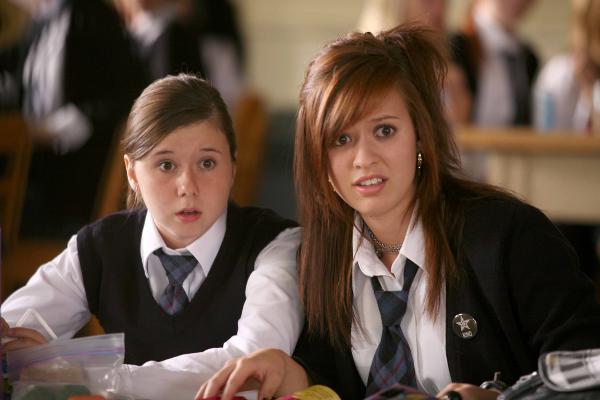
Le Journal d’Aurélie Laflamme est une comédie pour adolescents dont le personnage principal est tiré de la populaire série de livres écrits par l’auteure India Desjardins.

Le journal d’Aurélie Laflamme de Christian Laurence

Le journal d’Aurélie Laflamme de Christian Laurence

Le Journal d’Aurélie Laflamme est une comédie pour adolescents dont le personnage principal est tiré de la populaire série de livres écrits par l’auteure India Desjardins. Ce film est basé sur le premier tome de la série « Aurélie Laflamme, Extraterrestre ou presque ». Le réalisateur Christian Laurence vient du domaine de la télévision et signe ici son premier long-métrage de cinéma.

Comme on pouvait s’en douter d’après les succès obtenus par les livres, Le Journal d’Aurélie Laflamme fut reçu chaleureusement par le jeune public québécois qui en fit l’un des succès au box office de 2010. Au niveau international, le film de Christian Laurence eut droit à quelques sélections dans les festivals francophones, sans toutefois se démarquer outre mesure.

Un second film tiré des aventures d’Aurélie Laflamme a été produit par la suite.

Résumé

Aurélie est une adolescente de 14 ans, un peu perdue et donc en quête de solutions. Entre les habitudes de sa mère sédentaire et les chicanes avec sa meilleure amie, elle rêve à son premier french kiss ! Mais au fond, Aurélie se sent bien seule dans l'’univers, surtout depuis la mort de son père, il ya 5 ans.

Et si son père était simplement un extraterrestre, ayant quitté la Terre pour rejoindre sa planète? Génétique oblige, Aurélie serait elle-même une extraterrestre! Ceci expliquerait bien des choses. Par exemple, pourquoi elle se sent si différente des autres (surtout de sa mère), pourquoi elle n'’est pas capable d’'enligner deux mots sans faire une gaffe, et surtout pourquoi les garçons lui tapent vraiment sur les nerfs.

Synopsis officiel

Distribution

Marianne Verville (Aurélie Laflamme) ; Geneviève Chartrand (Kat) ; Aliocha Schneider (Nicolas) ; Jérémie Essiambre (Truch) ; Edith Cochrane (mère d’Aurélie) ; Pierre Gendron (Denis Beaulieu) ; Valérie Blais (Marie-Claude) ; Sylvie Potvin (Soeur Rose)

Fiche technique

Genre: Comédie dramatique - Origine: Québec, 2009 - Sortie en salles: 23 avril 2010 dans 83 salles au Québec - Durée: 1h48 - Classement: Général - Tournage: septembre-octobre 2009 - Budget approximatif: 4,1 M$

Réalisation : Christian Laurence - Scénario : Christian Laurence et India Desjardins, d'après le roman éponyme d'India Desjardins - Production : Claude Veillet et Lucie Veillet - Société de production : Films Vision 4 - Distribution : TVA Films

Équipe technique - Costumes : Julie-Anne Tremblay - Direction artistique : Marc Ricard - Montage : Hubert Hayaud - Musique : Martin Léon - Photographie : Geneviève Perron

"Indian family lifestyle and daily life stories" is a genre that wraps you in a metaphorical blanket. It is loud, it is opinionated, and it is incredibly loving. It reminds the viewer that life is not meant to be lived in isolation. For anyone looking to understand the soul of India—not the tourist spots, but the beating heart of its homes—this content is essential viewing.

Unlike the abrupt "goodnight" of the West, the Indian goodnight is a process. The father locks the main gate and checks it three times. The mother goes to the pooja room to put the gods to sleep. The children are forced to drink a glass of haldi doodh (turmeric milk). The grandmother gives the final blessing: "Jaldi so jao, subah jaldi uthna" (Sleep early, wake early).

It teaches you that in an Indian family, privacy is rare, but you will never have to face a problem alone.

Look at a traditional thali (plate). It is a geography of nutrition. Dal (lentils) in the center, surrounded by sabzi (vegetables), achaar (pickle), papad, and rice. The Indian family does not eat courses; they eat combinations . A bite of rice with a drop of ghee and a pinch of salt is considered a luxury.

The family is deciding whether to buy a new refrigerator. In a Western narrative, the husband and wife would make this call. In this Indian household, the grandmother is consulted (“The old fridge still works, don’t waste money”), the uncle is consulted (“Get the energy-efficient model”), and the 15-year-old is consulted (“It should have a water dispenser”). The final decision takes three days and involves six cups of chai. This is not inefficiency; this is democracy.

Since the subject "Indian family lifestyle and daily life stories" can refer to a genre of content (like YouTube channels, blogs, or literature) or the cultural experience itself, I have written a review that captures the essence of this niche.

The story of daily life in an Indian family is a story of interdependence. It trades absolute individual autonomy for a deep, comforting safety net of belonging. In a rapidly changing world, the Indian family lifestyle successfully bridges the gap between the past and the future, ensuring that no matter how modern life becomes, the warmth of the hearth and the blessings of the elders remain at the center of existence.

In urban apartments, the afternoon brings a quiet lull. For those working from home or managing the household, this is a time for a light lunch—usually leftovers from dinner or simple dal-chawal (lentils and rice)—followed by a short rest. In the rural heartlands, this time is spent under the shade of neem trees, sewing, shelling peas, or organizing the pantry. The Evening Reunion: Park Playdates and Homework Hustle

Daily life begins early. In millions of households, the day starts with the sound of a whistling pressure cooker and the aromatic steam of morning chai spiced with ginger and cardamom.

The living room becomes a cultural melting pot. The grandfather watches the evening news (loudly). The teenager scrolls through Instagram Reels (also loudly). The father tries to watch the cricket highlights. No one wears headphones because in an Indian family, shared noise is the white noise of belonging.

In a typical multi-generational home, roles are fluid but respected:

Ultimately, Indian family lifestyle stories are tales of connection. It is a life where personal identity is beautifully tangled with familial duty. From the shared morning cup of chai to the late-night living room debates, the daily life of an Indian family is a masterclass in how to stay deeply connected to one's roots while boldly reaching for the future.

Because in India, you don’t just belong to a family. You belong to a story.